Showing posts with label 52 in 52. Show all posts

Wednesday, August 30, 2017

A Tale of Four Books

For much of the month of August I seem to have been travelling. Some seventy hours of travel time between Calgary-Toronto-Ethiopia-Zambia and back again. And then there were the hours spent on the bus (in the photo to the right), going from destination to destination in Zambia while exploring Kitwe, Ndola, Luanshya, Chingola, Lusaka and Livingstone. I had time to read. A lot of time.

I carefully chose four books to take with me. The main factor in deciding which books I packed in my bags was this – did I want to have a copy of the book at home with me once I was finished reading it? I simply did not want to carry books all the way to Zambia and then lug them home at the end of the three weeks. It wasn’t so much a judgement on the author but more of an anticipation that I likely would not be referring to the book once I was finished reading it.

I took along a notebook with me and made some limited notes. Or took photos with my phone when the pot-holey roads of the Copperbelt province in northern Zambia did not allow for any sort of legible note-taking. I left one book on a plane cause that is where it really deserved to end up. Another I gave to a faculty member of the United Church of Zambia (UCZ) University because I thought he might be one of the only Zambians who might be willing to read the book. The third book I gave to the theological student who did all of the bus driving for our group cause I figured he would find the theology somewhat affirming of his beliefs. And the fourth book I brought home because I just could not finish it in time to give it away nor did it deserve to be left on a plane.

I started and finished The Purpose Driven Church by Rick Warren on the plane from Toronto to Ethiopia. Warren is the pastor who started the evangelical mega-church, Saddleback, in California. He clearly has a touch for attracting people to his church—so much so that Saddleback now has 20,000 attendees over 13 campuses. I really did not enjoy this book. It was not so much that I disagreed with his suggestions or methodology for growing the church but it was more that I didn’t appreciate how it seemed that the markers of success for his church focused on the individual rather than the differences for good that the church has made in the community and in the world. Obviously, he and his church have made a difference in many people lives but it felt odd to read a book so obviously focused on growth in regards to numbers rather than the growth of all the possible ministries. I left his book on the plane.

I read the next book, With or Without God, with an interest as to what is happening in the United Church of Canada this fall. The author of this book, the United Church minister Greta Vosper, is in dispute with the wider church regarding her belief—or rather, disbelief—in God, Jesus and the Holy Spirit. When a minister is ordained or commissioned by the church, they must declare that they believe in God, the Son and the Holy Spirit. There are leaders in the church that insist that if she no longer ascribes to this belief, she should no longer be a minister with the church. Vosper’s book, published in 2008, makes it clear that she does not believe that any of the above exists in our world. She also makes it clear that whether or not God actually does it exist, there is still a very real requirement of humanity to live in loving relationship with others in our world—which is part of her justification that she can continue to fulfill the role of minster within the church. Vosper’s theology would be an absolutely foreign concept to most faithful Zambians for their God is a very much a god that not only very much exists but is also in control of the activities of our world. I gave With or Without God to my minister friend who teaches at UCZ University and, during our time there, was open to exploring expansive views on God and God’s work in and amongst humanity. I’m not certain he will overly appreciate Vosper’s writing but I was not really interested in bringing back the heavy hardcover book. I took lots of photos of the paragraphs on which I wanted to make notes—a much lighter way of referencing her work.

Follow Me to Freedom: Leading and Following as a Ordinary Radical by Shane Claiborne and John Perkins had all the talk of the positive impact that the various ministries of certain Jesus-followers have had on the surrounding communities that I was missing from Rick Warren’s book. This book gave many examples of how different leadership styles impact the effectiveness of ministry of God’s people in the world. Both Claiborne and Perkins are not only amazing leaders of their own communities, they are also people who empower others to be amazing leaders themselves. While I have some serious points of contention with the theology of these authors, I do understand that together we have a basic and fundamental belief in God and God’s call for a just and loving world. As such, I found myself much more willing to learn about growth of the church from these authors than I did from Warren’s book. I gave this book to a new friend whose theological beliefs run much the way of these two authors.

Finally, I just finished reading Lillian Daniel’s book, When “Spiritual But Not Religious” Is Not Enough: Seeing God in Surprising Places, Even the Church. Daniel has been lauded and criticized for this book. On one hand, she reminds us that the church is to be a community of people who are to worship and do God’s work as a people who are interdependent on one another rather than as a series of individuals. And, on the other, in this writing and speaking against those who prefer to seek God on their own rather than within a bureaucratic, hierarchical religious system, Daniel seems to diminish and exclude the very people which churches, such as SVUC, are reaching out to welcome in when they are ready to try church once again. I’m glad that I ended up bringing this one home—I enjoy Daniel’s writing style.


I find it fascinating that I managed to pick books that had somewhat opposing views. I certainly did not do this intentionally but it was a happy coincidence. Or it was the Holy Spirit moving. Vosper vs Daniel. I choose the Holy Spirit.

Monday, July 31, 2017

And Just Before I Leave...I'm Back!

So...I got a little side-tracked.

 A few months ago I made this lofty goal for the year 2017. In a concentrated effort to make my way through the plethora of books that have been accumulating on my bookshelves, I decided to attempt to read a book each and every week throughout 2017.

The goal was aggressive, I admit. But I thought to myself - it was better to try than to leave most, if not all of them, unread this year and feel guilty about the fact that I wasn't reading them. I have a wee bit of a book addiction. I have never cottoned onto e-readers because I like books. I like to hold them in my hands. I like the feel of them. Sometimes the covers have that velvety smooth feeling. Sometimes they have raised writing.

The pages are always neat and tidy with new books. I can't decide if I prefer the really clean feeling of pages that are often used with textbook-type books--you know what I mean, they are smooth and and weighty feeling--or if I would rather hold a book that has the jaggedy, uneven pages of certain paperbacks that has a bit of a pre-worn feel to them--kinda like buying jeans with the rips already at the thighs or knees.

Either way. I'm find myself a bit helpless in bookstores. I know that I am not alone.

I set this big goal of mine and did my best to keep up. I read through a week of holidays home with the kids. I read through Holy Week. I read when my dear one squired me away for a few days on my birthday. I read and I read and I read. And then I couldn't read anymore.

I was tired of reading. I was tired of deadlines. I was tired of the rather heavy topics. I started saying, "I should" to myself. When one starts to say, "I should be reading", reading loses its joy. Reading becomes a chore. Reading becomes a burden. It is no longer relaxing. It's no longer fun. It's not a quiet, peaceful event. It's work. It's a burden.

So, I stopped cold turkey. I just put down the book I was reading and didn't pick it back up. A certain someone kept asking when I was going to put up a new blog post so it could be shared on the church Facebook page. I began avoiding eye contact. I didn't read for work or for fun. I just read magazines and Twitter (well, who can blame me for that with the soap opera of Trump's White House being played out by tweet?).

I wondered if I had broken my reading bone.

Then I went on holidays. On our first full day of our two weeks at the lake, my dear one says to me, "I would like you to read The Happiness Project so we can talk about it. Can you read a chapter a day so we can discuss it?" How can you resist a request a like that? The book was written by Gretchen Rubin. Apparently the author's thoughts and views reminded him of me. What's ironic is that I lent him the book when he was bereft of reading material in June.

I started reading that Monday. And I couldn't put it down. Turns out my reading bone wasn't broken after all. I had just sprained it a bit.

I finished the book that Friday. And then I finished the book I abandoned in May. Then I read two more. I rediscovered my love of reading just in time for me to leave for Africa.

We're off to the airport soon for the Zambia Youth Exposure Tour and I promised the certain someone that I would get this post to her before I left and then have another when return. I'm taking four books along with me. After I finish them, I will give them to the theological students we meet though the United Church of Zambia. So - a double goal - read and gift away the books.

Because I'm rushing off, I am not doing a book review on the books. I'm just accounting for them and giving a quick comment.

First - The Happiness Project: Or Why I Spent a Year Trying to Sing in the Morning, Clean My Closets, Fight Right, Read Aristotle, and Generally Have More Fun by Gretchen Rubin. My dear one was right - Gretchen and I might actually be the same person.

AWESOME book. This is someone who is an average, every day person who doesn't have huge struggles in her life but still finds herself wondering if she could enjoy life more. Not be so cranky or have, as her default setting, an attitude that precludes noticing the good things going on all around her. As my dear one has said, 'there's many a sermon in this book'. And maybe a book study.

Next, the oh so exciting sounding, Transforming Congregational Culture by Anthony Robinson. Honestly, this book is quite great. In fact, I think the reason why I stopped reading it was because I was trying to skip through it too quickly and was finding that I wanted to make notes to take to the Board at church. Which seemed like more work than my weeks were allowing at the beginning of May. So, I tried again and finished it. It was worth taking the time to slow down and make the notes.

Third - An Altar in the World by one of my most favourite authors, Barbara Brown Taylor. This book needs to be read by anyone who is exploring how to live the whole of their lives being present to the presence of God. Again - sermons abound and a book study of it would be well worth the time.

And, finally, Bird by Bird: Some Instructions on Writing and Life by my next most favourite author, Anne Lamott. The book is named as thus because when they were children, her brother had a massive report to do on birds. He had three months to complete the assignment. Anne remembers her brother, near tears, sitting at the dining room table at the cabin on the Sunday before the report was due having not done any work in the previous three months. Their father, a published author, went over to him and told him that it would be alright, he just had to write it bird by bird. Anne's writing is so easy to read. She is funny. And vulnerable. And encouraging. I love Anne.

So, that's it. My Goodreads Goal Page tells me that I am currently SEVEN books behind schedule - even AFTER I've entered the books that I will read in Africa. Sigh. Not ideal. But better than before. To give me a boost, I took a photo of all that I have read so that I can see how much I've already read in 2017. Nineteen books so far.


SaveSaveSaveSave

Sunday, April 30, 2017

Another Sunday, Another Book

It's Sunday - that means another book needs to be finished and written up. Book 15. I'm still one behind. I had thought I could catch up by the end of the month but that didn't happen. And I'm okay with that. For now.

This Challenge of mine has been an interesting journey in more ways than one. I have collected or been given books over the past years for a variety of reasons. Depending on my life circumstances, I would read the book in short order or, more times than I care to admit, I put the book on my bookshelf and tell myself that I would read it when things calmed down. But, as it happens with four children and taking university courses while in ministry training and then working the first years at SVUC that brought it's own series of challenges, reading extra books on theology or spirituality above and beyond what was required for congregational ministry was just too tiring.

So, this year I pushed myself to pull together 52 books that have been hanging around on my work and home book shelves - just sitting there and mocking me, reminding me that I've been lazy, that I've lacked motivation, that there was a huge amount of new and exciting information to be had if only I would just sit down and read now and then. It sucks how the voices inside our heads can be such jerks to us.

Once all the books I've purchased at conferences and speaking events and all the books given to me were lined up nice and neat on one of my bookshelves in early January, the reading began. As I've been deciding which book to read each week, I've been recalling the circumstances in which the book came into my possession. That process alone has been a fun, unintended consequence of this Challenge.

This week, I read A New Earth: Awakening to Your Life's Purpose by Eckhart Tolle. This book was given to me a few years ago by my friend and colleague, Kelley. I can't remember specifically instigated her to give me the book, but it was loaded with sticky notes marking certain pages. I have to say, one of the reasons I've resisted reading this book over the years is because I had it in my head that Eckhart Tolle was a little too flaky-spiritual for my taste. I am trying to recall why I thought this about Mr. Tolle, but I'm thinking it might have been just simple snobbery on my part.

I started this book and, much to my surprise, I couldn't put it down. I've already starting planning the book study for SVUC that will run sometime in the fall or New Year. This is not a book to read alone. It NEEDS to be read with a group of friends or trusted folks so that each section can be thoroughly discussed and explored.

The long and short of A New Earth is that our ego controls so much of our lives--our emotions, our experiences and our responses to life--without us even being aware of what is happening. And until we are aware of how the ego operates within our being, we cannot be at peace or become the whole human beings that God intends for us to be. I know. Sounds a little hokey. But, I believe that Mr. Tolle has hit the nail on the head in several places throughout the book and for those of us who have recently read Daring Greatly by Brene Brown, I see this as an excellent follow up to that book study.

Here's a small taste of what Mr. Tolle has to say,
An ego that wants something from another--and what ego doesn't--will usually play some kind of role to get its 'need's' met, be they material gain, a sense of power, superiority, or specialness, or some kind of gratification, be it physical or psychological. Usually people are completely unaware of the roles they play. They are those roles.
I am looking forward to this book study next year - I hope you'll be able to join in with the study!

Saturday, April 22, 2017

The Monkey Off My Back

I've had a monkey on my back. Or rather, on my bookshelf.

Long story short, there was a moment sometime last year, that I was involved in a lively discussion concerning the polity of the church and how ineffective our church structures can be when polity is not consistently adhered to or, at worst, ignored. My colleague and I were lamenting the damage that can be done when either clergy or congregations (or both) are not brought to bear for patterns of behaviour that are not life-giving or life-affirming for everyone involved. 

Within the United Church of Canada, there is a Remit that has been submitted to congregations and presbyteries for consideration. The Remit involves the creation of an Office of Vocation for ministry—which, in simplistic and general terms (do NOT quote me or believe that this is the totality of the Remit – I’m only trying to explain the context of the lively discussion), would result in the creation of a denominational disciplinary body should the Remit pass. The creation of such a body would remove the local relationships from the often complicated and emotionally-charged inquiries that are made when the effectiveness of a minister is under review or if a congregation seems to have a toxic or dysfunctional nature, impeding the ministry of their called clergy. A denominational body would allow for people, who are more removed from the immediate goings on in the presbytery, the congregation and the minister’s life, which would, hopefully, allow for open and transparent reviews to take place.

Anyway, the conversation ended and we went on with our separate days. Until the next Presbytery meeting when my colleague approached me and handed me John Updike’s book, In the Beauty of the Lilies.
I should read it.
There is an interesting bit about removing oneself from ministry.
Pages were marked.
There were stickies with notes.
I tried reading it.
Really, I did.
Have YOU ever read John Updike?
Not bedtime reading for sure.


So, a year later—after it has sat on my shelf at home, near my bed, mocking me because I only made it 8 pages before I gave up—I added it to my To-Read pile for this 52in52 Book Challenge of 2017. About three weeks into the Challenge, I realized the grave error of adding this book (along with four or five others) to the pile. These certain book choices involve too much reading for a week. Especially if I still have to:
  • write a sermon
  • go on pastoral visits
  • be at a committee meeting or two
  • pray
  • lead a bible/book session
  • prepare worship services.
You know. My job. Ministry.

So, I made a plan to read this difficult novel that was not my choice to read. Ten pages at a time, over time. I even made a little check list. I began considering what my reward for each 100 pages would be.

But then, this week happened. I was compelled to pack for a quick, short get-away trip that was a bit of surprise planned by my Beloved. I knew I was leaving but I didn’t know where. I didn’t know how much down time there was involved so I took a few options for reading. As a lark, I threw this novel into my luggage. Turns out we had a bit of down time and plenty of airplane time. So, I pulled out John Updike and tried again.

I know my colleague and more than a few of you (my Beloved included) will shake your heads and say, ‘for pete’s sake, you DON’T have to read it. It was only a suggestion.’

But, to be honest, there was one line, near the front of the novel (obviously cause I only made it 8 pages on my first go around), that had caught my attention and made me want to see what happened. The line was this:
…the Reverend Clarence Arthur Wilmot, down in the parsonage of the Fourth Presbyterian Church at the corner of Straight Street and Broadway, felt the last particles of this faith leave him. The sensation was distinct—a visceral surrender, a set of dark sparkling bubbles escaping upward. (5)
The novel goes on to detail how Clarence tried to remove himself from ministry—and this is what my colleague thought I would find interesting—and the difficulty, in the early 1900s, of placing oneself on the Discontinued Service List (our modern UCC language).
“Calvin would say ‘it would be a very serious accusation against us to have rejected God’s call.'...[But]…once the presbytery be satisfied that he cannot be useful and happy, in the exercise of his ministry, they may allow him to demit the office and return to the condition of a private member in the Church. (73)
The reason Clarence feels called out of ministry is due to the rise of scientific knowledge and rational thought that did not permit an all-powerful and all-knowing God to exist. The moderator of Clarence’s presbytery urges him to allow his mind to expand to include the new understandings of the universe. The moderator blames the theological education Clarence received, stating,
“You imbibed conservatism there, and it limits your thinking now…[theology] quite helpless when the winds of history blow.”...The moderator goes onto to say that modern theologians are “taught not to be afraid of science, not to fear admitting that the Holy Book is embedded in history—that it contains the best wisdom of its time, but that time is not our time.” (75) 
I love how this is written. In the United Church, newly ordained and commissioned clergy need to be in essential agreement with the Basis of Union which include 20 Articles of Faith, written in the years leading up to Union in 1925. Ministers in training do a lot of exploration of what it means to have theological statements, creeds, and articles of faith that inform us of how the people of those times understood God, the ministry of Jesus and the work of the Holy Spirit. To know the Bible as a book that is a living document, that allows, encourages and interprets current and modern understandings of the world, science and technology, means that we are adding to the history of the first Christians. We are not stuck. We need not be afraid. We have the Word of God and we can use its wisdom to go forth and continue the rich and long history of God’s people in a world filled with the knowledge of science, astrophysics, evolution and quantum theory.

PS. The rest of the book was okay. Updike uses a LOT of words to describes situations, scenarios and events that I had little patience with. After learning about Clarence, we hear from his son, then the son’s daughter and, finally, from her son. No one is really happy in their life and there is an existential angst that is threaded through each of the characters that was not very uplifting. With apologies to any Updike fans, this is not on my ‘read again someday’ list. I’ll be glad to hand it back to my colleague at next month’s Presbytery meeting - the monkey is finally off my back/shelf.

Saturday, April 15, 2017

Bullseye!

Not very often do I sit down and read a book, cover to cover, in just a couple of hours. But, with a certain beloved staff person nagging me enquiring if I had a book blog this week to post on the SVUC Facebook page today, I decided to take the afternoon to read.

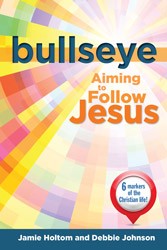
I picked up Bullseye: Aiming to Follow Jesus, written by two United Church of Canada ministers, Jamie Holtom and Debbie Johnson. I was given this book by a colleague who took a course led by Jamie and Debbie. I'm wishing now that I attended their course. This book is excellent and I will be sharing it with the lay leadership of SVUC.

Bullseye maps out six markers that are signs of a Christian life - spiritual practice, worship, community, serving, giving and sharing Christ. For those at SVUC who have participated in the Natural Church Development surveys, this book will be reminiscent of the different elements measured in that survey. The essence of Bullseye is that a congregation grows in faith, develops a sense of community and encourages its members to live out God's love for the world when the spiritual lives of everyone involved are nurtured.

Here are some quick quotes from each of the six markers included in this book. If you find yourself intrigued and want to know more, email me.

Spiritual Practices

  • When we become intentional around spiritual practices we're simply bringing our life before God and opening ourselves up to all the beautiful things [God has created]. (19)
  • [Spiritual practices] may actually feel kind of weird, or you may not experience anything profound at all...but, over time, if you keep at it, you will start to experience something quite transformative as you feel God's presence close, as you feel the power of being so intimately connected with our Creator. (13)
  • why bother? Because the spiritual practice of prayer left Jesus in a state of gratitude and with a sense of purpose and clarity about God's call on his life. Prayer gave him the connection to God that brought him the power and strength to persevere in all circumstances. (24)

Worshipping Together Weekly

  • There is something that can and does happen in the context of a worship gathering that continues to be worth making it a priority in our lives as followers of Jesus. (38)
  • Studying scripture can lead us into the character of God, but worship takes into the heart of God. (45)

Discovering Authentic Community

  • '...there was this group of people that I have been so blessed to walk with, share life with, grow with, be connected to. I have to tell you, I really couldn't of done it on my own.' (59)
  • The power of small groups, of being connect with other, whether it's a mentoring relationship, working team, or small group, is knowing one another, and somehow God blesses that. (65)
  • ...authentic community is...'walking life together' or 'doing life together'. (66)
  • Discovering authentic community leads to growth...because we really do become who we hang out with. If we want to grow in Christ, let's hang out with people who are growing in Christ! (69)

Serving

  • We serve because Jesus served. We serve because Jesus invites us to serve. We serve because we have been given a unique gift in Christ's own Spirit that needs to be offered for the common good. We serve as our response to what God is doing in and through our lives. We are blessed to serve and by serving in Jesus' name. (101)

Giving Generously

  • [Fundamental principles]: God owns everything, what we have been given is to be invested in God's mission, growing in generosity is key to our growth in discipleship (112)
  • It took a generation to understand how big and faithful God was and is (in reference to the Exodus). Learning to recognize and respond to the generosity of God offers us freedom from bondage--from the pull of our culture to spend more, from the fear that what we have or who we are is not enough, from the slavery of "stuff". (116)

Sharing Christ

  • Why share Christ within the reality of our world today? Because...the truth is, we live in a world that is broken and in need of good news. All around us there are people who are stressed and lonely and hurting. (131)
  • If you really believe you have something good to share, why aren't you? Why are you keeping it from a person you encounter, know or love? (140)
  • Our job isn't to convert or judge or prove anything. Our job is simply to be open, sharing Christ. And when we are--you never know what God might do. (150)

Saturday, April 8, 2017

When You Can't Achieve Your Goal, Change the Goal

The dreaded moment arrived. That confluence of time--or should I say, lack of enough time--meeting a loss of commitment and a holiday break. And my book didn't get finished. Nor the next one. Never mind last week's book. Sigh.

Some force of nature happened about mid-March and it occurred to me, in a shocking revelation, that Easter was close at hand and I was not, prepared. Not.At. All.

At SVUC, we have five worship services in eight days and I had only one completely finished. (Which is actually disingenuous of me cause there's three clergy putting that one together and one of the others is responsible for the final version.) In attempt to ward off a bit of panic, I buckled down and started to get done what needed doing and gave it to who it is that needed it so that all the material would magically become a worship service (who, by the way, is Essie, our office administrator - have I told you yet that she's awesome? Not yet? Well, she is indeed, awesome.). Anyway, push came to shove and I only had time to shove back. And then take a few days of holiday time to spend Spring Break with the kids. During which time I was CERTAIN that I would read a bit. And I did. But I didn't read 'work' books. Just my recipe magazines and my novel (which currently is, My Brilliant Friend by Elena Ferrante - good but is taking a long time to get through).

So, here I am. A full three weeks behind in my reading and blogging for my reading project of attempting to read 52 books in 52 weeks for 2017. I knew this time would come. Fifty-two books in 52 weeks was a daunting goal. Not only did I want to read that many, I wanted to blog about each one. So, the moment has now arrived and the question is, what am I going to do about it?

Well, as someone very significant in my ministry training once told me when I asked him what he did when things weren't going the way he had expected - he answered, "oh, that's simple - if I can't make my goal, I change the goal!"

I have read two of the three books I'm behind blogging about. So, instead of writing about each of the two books, I'm bundling both of them up in this blog post. And we'll see what happens tomorrow when I choose last week's book and this next week's book. 😀

So, here we go...

Book 12 was Preaching the Big Questions: Doctrine Isn't Dusty by Catherine MacLean and John Young. This book was FASCINATING. And I will be using it for a series of study sessions in the fall about the United Church of Canada and where we (SVUC) are situated within its big tent. The UCC has a diverse range of theologies wishing the people who lead the Church, who lead in the congregations and within the lay folks who sit in the pews. Catherine and John's book does a very good job of articulating what we (the royal we of all the United Church) believe as a whole on a variety of topics, such as:

  • Sovereignty of God
  • Christology
  • Atonement
  • Grace & Salvation
  • Authority of Scripture
  • Sin
  • Baptism
  • Communion
So - if any of these topics caught your eye and made you wonder or made your heart feel funny -cause who doesn't feel funny when salvation is mentioned? - consider joining the discussion that we will be starting next fall at SVUC.

Book 13. Ugh. Lived up to its number. To be honest, I had already read half it last year when I was taking an academic writing course. Please notice, I read this under obligation only. I felt the need, for some reason known only to God, to finish it. No offence to its author, Joseph Harris, it just is not my sort of reading. Rewriting: How To Do Things With Texts was informative but painful. I'm, in some alternate universe, attempting to create my Masters Thesis. Apparently writing in an academic way is necessary to achieve this. So I read the book. Anyone want it? Cause I'm done with it. Done.

And thus ends the book blog for Books 12 & 13. Onto Book 14. And 15. Have a great week!!

Friday, March 17, 2017

Standing Naked Before God

Okay, let me say, right off the bat, if you are going to do a Google search for this next book that I have read, please type in the ENTIRE title.

Do not - I repeat - DO NOT just type in, "Standing Naked".

Especially if you are using a public computer.

Sigh.

The resulting images that I found when I made this mistake, took me back to a certain music director's birthday and I wanted to find her a picture of a man in a kilt wishing her a 'happy birthday' (cause, you know, she appreciates the art form). Well, apparently the words I used were too specific for Google and the photos that appeared cannot be unseen. EVER. God help me.

But, I digress.

During this 11th week of 2017, I read this lovely book by Molly Phinney Baskette. The full title is, Standing Naked Before God: The Art of Public Confession. Many people who attend SVUC will be familiar with some of the content of this book as I have used the ideas from this book during our worship services.

I met Molly last year at the gathering for the clergy for Alberta Northwest Conference in the United Church of Canada. The idea of only clergy (ordained, diaconal and designated-lay ministers) coming together to network, socialize and encourage one another came out of the last business meeting of the Conference. While we pride ourselves on being an inclusive church, we also recognize the value and necessity of meeting in specific groups so that stories and life-experiences can be shared with those other people who have chosen to follow a similar life-path. There is level of safety that can be achieved and a deep vulnerability that can be shared when you know the others in the room know EXACTLY what you're talking about.

Molly was the theme speaker for the gathering. As I was a member of the planning team, she invited me to participate in a worship practice involving vulnerability that her congregation has embraced over the years. She asked if I would and I said 'sure'. My beloved asked me later that day, what exactly do you have to do? How bare do you have to make your soul? Is there crying involved? Can you get out of it?

I had to admit that I asked her NONE of those questions. I just jumped in with both feet. I regretted it the moment I received her follow up email.

I was to confess my insecurity/doubt/fear/feeling of abandonment by God and then offer words of assurance. Just that little thing. To a room full of my colleagues. Most of whom I don't know very well. Or at all.

Molly is strong advocate of the use of personal confession in a public place (aka: church) so that each of us can take those pieces of ourselves that are broken and reconcile them with God. To be broken, to have sinned, is to have done "anything that separates us from God, others or our own best self." By speaking about this brokenness/sin out loud, to our church friends and family, we break open a part of ourselves and let God work within us. Our confession can be heard by others and shine a light upon what hurt and pain they are secretly holding. And the words of assurance {where God was found in all the mess, where God showed up} is the hope and the reminder of God's love and grace that is offered to each and every one of us. Regardless. Without exception.

So, that day, in front of my clergy colleagues, me and another clergy person confessed our pain, our brokenness. And we offered words of assurance. What I heard from my colleague was deeply touching and very moving. When it was my turn to speak, I felt only love and grace from those gathered. Everyone agreed that those moments of confession and assurance were vulnerable and a bit unsettling but, above all, they were real moments of connection - with each other and with the Divine.

When I returned to SVUC after my sabbatical, I instituted this practice of confession and assurance. Four people have gifted the congregation with their stories. I have just muddled along in my leadership of this practice, using my own experience as the guidance. Now that I have read this book and learned how this practice developed in Molly's congregation, I have a more solid place of understanding to ask and encourage the people of SVUC to get up themselves and stand naked before God.

Sunday, March 12, 2017

God & Empire

My beloved reads non-fiction books like I read fiction. Fast and furious. Non-fiction kills me a little bit. There are so many words. And facts. And tediousness. Don't get me wrong - non-fiction with topics that I interesting and engaging are mostly interesting to read. But they are still hard to sit down with  and just read. Cause there's just so many words.

I asked my beloved how it is that he reads non-fiction so quickly. It seems to me that he can sit down with a new book and be finished it in an afternoon if it intrigues him. He tells me the secret of reading a non-fiction book is not really reading it. You are to scan it. Which makes me feel like I'm cheating. I tried this strategy at different times in my ministry training - reading the 80 hours of reading material for each Circle, twice a year. But I never got into the groove of scanning in such a way that I felt that I really retained what each article was about.

Until this week.

This week I read/scanned a book in three days. It helped that I had a good understanding of the topic already.

I must of bought John Dominic Crossan's book, God & Empire, more than six years ago. I likely bought it when I was still in school. And I probably thought I would read it soon-ish. For fun. Then, it must of occurred to me that you don't read Crossan for fun. You read Crossan to learn something MORE. And in depth. John Dominic Crossan is not a light Saturday afternoon read.

John Crossan is an amazing theologian. I have heard him preach at the Festival of Homiletics. He is a very dynamic and engaging speaker.

{'Homiletics' is the $25 word for 'preaching'. No. Really. There is a whole festival - a.k.a a conference - in which preachers preach for other preachers. It is AWESOME. But I digress.}


As I began to read God & Empire this week, I discovered that over my extensive schooling and the past six years of reading other materials in my line of work, what Crossan was saying was no longer new to me. And so, rather than read it word for word I scanned the book.

[Who absolutely needs to know the fine details of how the Book of Revelation fits in with any of the book series based on the rapture? Answer: Very few. Cause we are not rapture people. Nor are we really Revelation people.]

There is a lot of information that I didn't know before but it is information that is specific to certain topics that I don't necessarily need to become an expert in any time soon. But now I know where to go when I need more details on any of those subjects.

 God & Empire explores how the radical religious beliefs of Jesus and the early Christians challenged and opposed the power dynamics of the authority and rule of the Roman Empire. There are many different examples of how the radical welcome of Jesus stood in opposition of what society, as whole, demanded of its citizens. Crossan does a great job of breaking down the seemingly different personalities of Paul in his various letters in the Christian Scriptures (New Testament). He shows that Paul actually wrote some of the letters himself and how other people wrote letters in Paul's name later, as time went by. Paul's vision of God's Kingdom on earth was very much one of equality amongst all people. However, those who came after him were co-opted by the society in which they lived. Gender discrimination inched its way into the letters, not because this was Paul's thinking but rather, it was the belief system of later theologians who 'borrowed' Paul's good name for credibility.

I have two quotations that I want to lift up out of the book this week....italics are my commentary.
The Christian Bible records the ongoing struggle between the normalcy of civilization's program of religion, war, victory, peace (or more succinctly, peace through victory [this is how Caesar obtained peace, through winning battles])...and the radicality of God's alternative program of religion, nonviolence, justice and peace (or more succinctly, peace through justice [God's vision of how peace is obtained]). p.94
Justice is the body of love, love the soul of justice. Justice is the flesh of love, love is the spirit of justice. When they are separated, we have a moral corpse. Justice without love is brutality. Love without justice is banality. p.190